
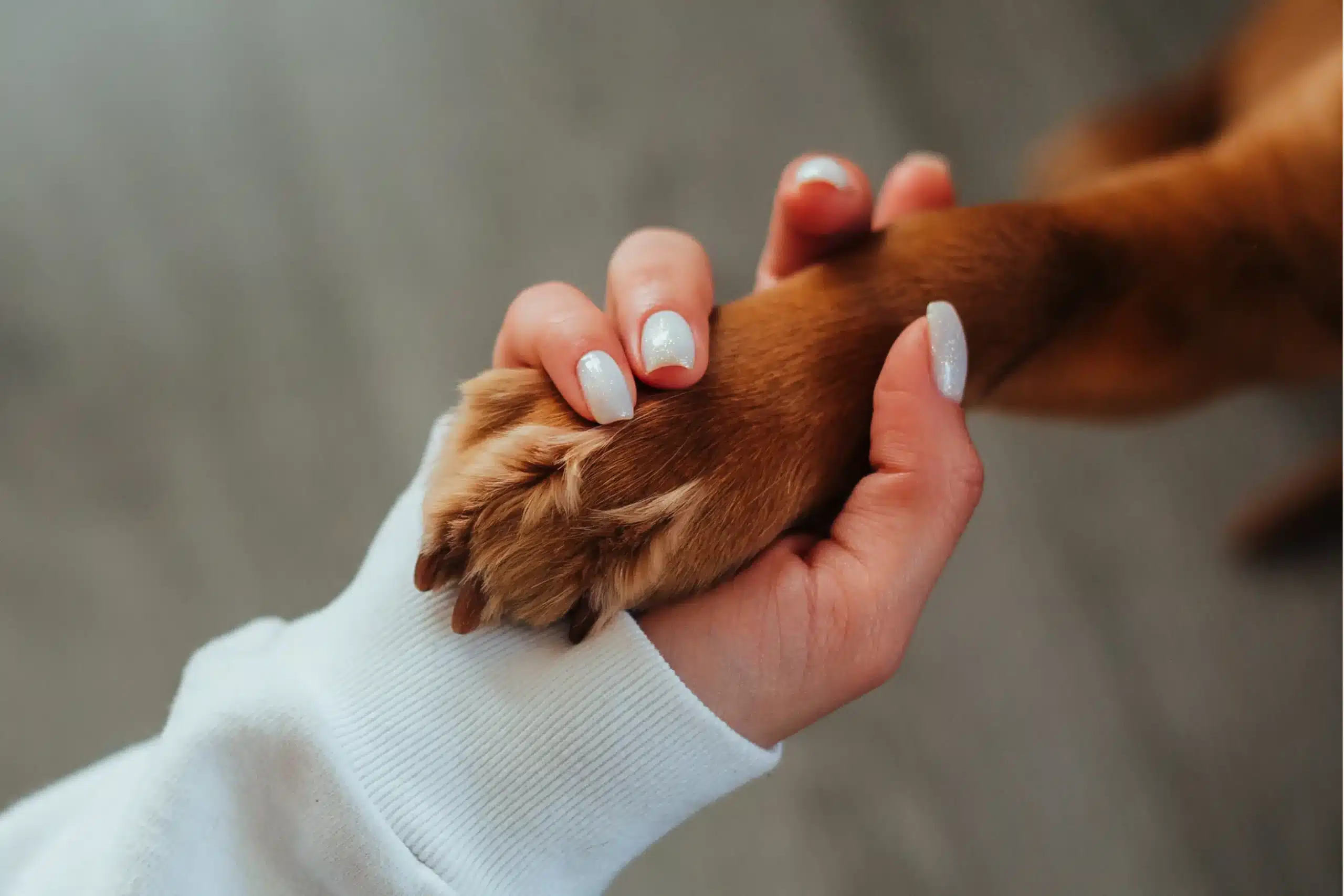
There is a quiet revolution happening at the intersection of human and veterinary medicine, and it begins with a simple, almost obvious idea: the dog asleep at your feet is not as different from you as we once believed. You share a home, a climate, the same air, often the same couch — and, far more often than most people realize, the same diseases. That shared biology is the foundation of one of the fastest-growing fields in modern science. It’s called One Health, and it may quietly reshape the future of medicine for every species we love, our own included.
What is One Health?
One Health is the principle that human health, animal health, and the health of our shared environment are inseparable — and that progress in one can accelerate progress in the others. Within that broad idea sits a more specific and powerful discipline: comparative, or translational, medicine, the practice of studying naturally occurring diseases across species to better understand and treat them in all of us.
The concept is older than the name. In the nineteenth century, the pathologist Rudolf Virchow — often called the father of comparative medicine — argued that there should be no dividing line between human and animal medicine. The physician William Osler studied disease in animals as readily as in people. But the modern framework is generally traced to the American veterinarian Calvin Schwabe, who coined the term “One Medicine” in 1964 at the University of California, Davis, arguing against the artificial walls that scientific research had built between fields. Decades later, the 2012 book Zoobiquity brought the idea to a wider audience, showing how cardiologists, oncologists, and psychiatrists had been overlooking a vast natural laboratory walking around on four legs.
Why pets are better teachers than lab mice
For most of the twentieth century, medical research leaned heavily on diseases artificially induced in laboratory rodents. It’s a useful model, but a limited one — a tumor created in a genetically uniform mouse in a sterile facility behaves very differently from a disease that arises on its own, in a living body, in the real world.
Companion animals offer something a lab mouse never can: disease that occurs naturally, in patients who live exactly as we do. Our dogs, cats, and horses breathe the same air, drink the same water, share our households and our habits — and they develop the same spontaneous illnesses we do, from cancer to arthritis to cognitive decline. They also age several times faster than we do, which means a condition that would take decades to unfold in a person can be studied across a companion animal’s lifetime in just a few years. The result is medical insight that is both more realistic and dramatically faster to obtain.
Where humans and animals heal together
The overlap is not abstract. It shows up in some of the most consequential areas of medicine.
Comparative oncology: Bone cancer offers one of the clearest examples. Osteosarcoma is diagnosed in fewer than a thousand people in the United States each year — most of them children and young adults — which makes it painfully difficult to study and to develop new treatments for. In dogs, the very same cancer is diagnosed more than ten thousand times a year, and at the biological level it is strikingly similar to the human disease. The National Cancer Institute’s Comparative Oncology Program coordinates a network of roughly twenty academic veterinary centers — the Comparative Oncology Trials Consortium — that run clinical trials in pet dogs with naturally occurring cancers. A dog enrolled in such a trial may receive a cutting-edge immunotherapy years before it would otherwise reach the clinic, helping the dog immediately while generating data that can speed the same treatment toward human patients. Everyone in the room benefits.
Orthopedics and osteoarthritis: Horses and large-breed dogs suffer cartilage wear, ligament tears, and joint degeneration in much the same way human athletes do. Regenerative therapies such as platelet-rich plasma (PRP) and stem-cell treatments are routinely refined across species — what optimizes tissue healing in an equine athlete can inform how we treat a torn ligament in a person, and vice versa.
Neurology and brain health: Aging dogs develop a form of cognitive decline remarkably similar to Alzheimer’s disease, and many companion animals experience spontaneous epilepsy. Because these conditions arise naturally and progress quickly, new anti-seizure medications and neurological therapies are often trialed in animal patients before reaching human application.
Why the accelerated model works
The logic of One Health forms a kind of virtuous loop:
1. Shared genetics and a shared environment mean humans and their pets are exposed to the same risks and develop the same diseases.
2. Natural disease in a companion animal unfolds far faster than it would in a person — often five to eight times faster across a lifespan.
3. An accelerated veterinary study can test and optimize a therapy with greater speed and less bureaucracy than a traditional human trial.
4. A lifesaving treatment emerges — for both species at once.
Each step compresses the timeline of discovery. In a world where it can take more than a decade to bring a new human therapy to market, that acceleration is not a luxury. For a family running out of time, it can be everything.
The institutions leading the way
This is no longer a fringe idea. Leading programs such as the UC Davis School of Veterinary Medicine — home to a premier One Health Institute, fittingly at the very campus where the concept was born — use advanced imaging and molecular diagnostics to connect veterinary breakthroughs directly to human clinical research. The NCI’s comparative oncology work has now spanned two decades. Across the country, medical and veterinary schools are increasingly working side by side rather than in isolation.
Where My Best Bud fits in
My Best Bud was founded on this exact conviction. We are, at heart, a science company in the form of a wellness brand: we develop precise, clean formulations for the animals people love, and we carefully gather the real-world data those formulations produce — so that what eases a beloved pet today can help inform what heals a patient tomorrow.
One area remains conspicuously understudied within the One Health framework: the therapeutic potential of cannabis. Even as the science of comparative medicine has flourished, this avenue has been left largely unexplored, often for reasons of regulation and stigma rather than biology. We believe that gap is exactly where meaningful work waits to be done — carefully, to a medical standard, with the dignity that every patient deserves, especially the ones who cannot tell us how they feel.
Because in the end, One Health rests on a truth most pet owners already know in their bones: the animals we love are not separate from us. They are family. And healing, when we do it right, was never meant to stop at the line between us and them.
Sources & further reading
– National Cancer Institute, Center for Cancer Research — Comparative Oncology Program and the Comparative Oncology Trials Consortium (COTC)
– UC Davis School of Veterinary Medicine — One Health Institute
– Zoobiquity (2012), Barbara Natterson-Horowitz & Kathryn Bowers
– One Health Commission — What is One Health?
This article is for educational purposes and does not constitute veterinary or medical advice.